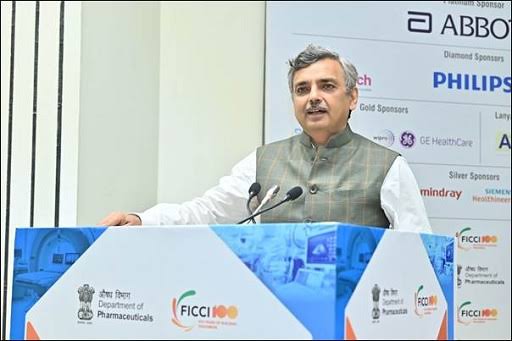
Artificial intelligence (AI) is reshaping healthcare and expanding how medical researchers and clinicians interpret disease. Its ability to analyse images, clinical records and genomic information together could connect diagnosis more closely with treatment response drug discovery. For the pharmaceutical sector, this offers opportunities to deepen biological understanding and inform research and care, according to Kashif Rajpoot, Professor of Medical AI, University of Birmingham, Dubai.
“In India, the relevance extends across pharmaceutical research, diagnostics and healthcare delivery. Collaboration between industry, hospitals and academic institutions could establish where medical AI offers practical value, while generating evidence that reflects Indian patients and clinical settings. AI also contributes upstream to understanding disease mechanisms,” Rajpoot added.
Researchers are investigating how AI can interpret these patterns to reveal insights beyond disease identification. “For Indian pharmaceutical companies and academic groups, these applications offer a basis for collaboration around specific disease mechanisms, biomarkers and therapeutic questions. Defined objectives would help establish whether AI contributes useful findings or improves research decisions, added Rajpoot.
Foundation models, trained on large datasets and adaptable to several tasks, are central to this work. TITAN and PRISM2 learn from digitised tissue slides and pathology reports, supporting research applications across classification, biomarker prediction and prognosis. Their significance lies in extracting potentially useful information from material already collected during diagnosis.
AlpishaGenome predicts how DNA changes may affect molecular processes, including gene expression. This helps researchers investigate genetic variation and prioritise questions for experimental study.
Clinical decision support is evolving alongside discovery. Google’s AMIE research examines disease management across successive simulated consultations, including treatment reasoning and alignment with clinical guidelines.
Rajpoot stated, “Across these applications, predictive performance and patient benefit remain distinct. Accurately predicting an outcome does not establish that acting on the prediction improves care. Likewise, laboratory validation does not demonstrate treatment safety or efficacy in patients. For India, evaluation must consider local populations, tissue preparation, imaging equipment, clinical documentation and diagnostic pathways. Partnerships between hospitals, laboratories, pharmaceutical companies and universities could examine both scientific performance and practical use.”
Medical AI is connecting diagnosis, clinical reasoning and scientific investigation more closely. Its contribution will depend on whether these connections produce better experiments, more reliable treatment decisions and demonstrable patient benefits. “Building that evidence requires sustained collaboration, transparent methods and careful interpretation, so that promising technical capabilities can be assessed against the clinical and scientific needs they are intended to address,” added Rajpoot.
Source: Pharmabiz