The government plans to address the high costs of innovative medicines by first negotiating prices. Compulsory licensing will be considered only after other alternatives are exhausted. Trade margins on high-cost drugs are being examined to enhance affordability. Discussions are ongoing with pharmaceutical companies to improve access and affordability of patented drugs. The government is also working on initiatives to support the local pharmaceutical manufacturing sector.
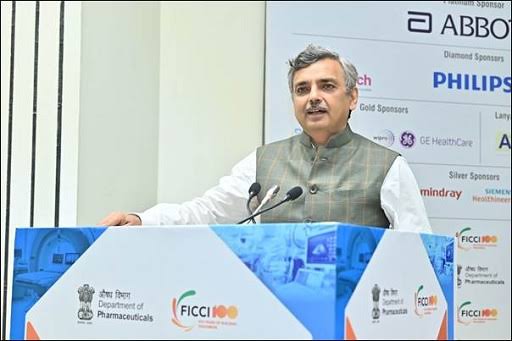
New Delhi: Compulsory licensing of expensive innovative medicines remains an option for the government, but it will be considered only after exhausting alternatives such as price negotiations, bulk purchases and voluntary licensing, says Department of Pharmaceuticals secretary Manoj Joshi. In an interview with ET’s Teena Thacker, he also discusses trade margin rationalisation (TMR), drug affordability, data protection, the Uniform Code for Pharmaceutical Marketing Practices (UCPMP), and plans to boost local drug manufacturing. Edited excerpts:
The government has capped trade margins on cancer drugs. Is it examining extending TMR to other high-cost medicines?
We are examining it. We are looking at how much intervention we should do. There are anomalies we find in other drugs as well. We are only looking at more expensive drugs and mainly drugs administered in hospitals. In the case of hospitals, most of the drugs where the margins are high are those used in ICUs and other emergency care areas. Anti-infectives, emergency medicines and medicines used in ICU care are being examined as their prices are on the higher side. TMR is the first measure to be used if warranted. But only on expensive drugs. Below Rs 100, we have no intention of using it.
Can TMR bring down prices of patented drugs?
Patented drugs do not have very high margins. There is a single supplier. High margins normally are given when there are a large number of suppliers. That’s the inverse logic that applies in drug prices: the more the competition, the higher the margin; the less the competition, the lower the margin.
Hospitals could shift charges to other services. How can the government ensure patients benefit?
Globally, insurance companies, package rates and transparency in hospital billing and charges work well. In India, with PMJAY (Pradhan Mantri Jan Arogya Yojana) and other schemes, more of this is happening. Hospital charges are negotiated by such agencies.
Is the government considering compulsory licensing to make expensive innovative drugs more affordable?
The tool of compulsory licensing is always available to the government to ensure access to medicines. However, this tool should only be used after exhausting other measures such as price negotiations, bulk purchase, voluntary licensing, patient assistance programmes, etc. Our first effort is to utilise the bargaining power of the large requirement of Indian patients to negotiate lower prices.
What is driving the high cost of newer cancer medicines?
From 2007-08, biological drugs have been coming into use for cancer treatment. These new biological drugs are quite effective. A number of these drugs are still under patent.
Why did the government focus on cancer drugs for TMR?
Oncology and immunotherapy drugs for cancer treatment are the newest and most expensive drugs. They also had the highest trade margins. They are predominantly sold through hospitals. The decision on which drugs or brands are to be used is made by hospitals and doctors and not by patients. This led to very high margins and unduly high charges for patients. Therefore, intervention was warranted to regulate the market.
What is the government doing to make patented drugs more affordable beyond patient assistance programmes?
We are having discussions with companies on how such expensive drugs could be made more affordable and how access can be improved, especially for patients under PMJAY, insurance schemes and various central and state schemes such as CGHS.
The pharmaceutical industry has been seeking regulatory data protection. Has the government made a decision?
On the request of MNCs for regulatory data protection, the government has yet to take a decision. The government needs to balance the interest of innovator companies in getting extended marketing exclusivity and access to medicines for patients.
Source: Economictimes