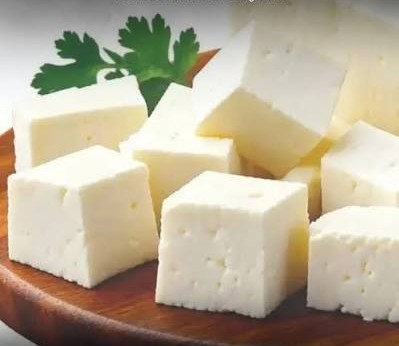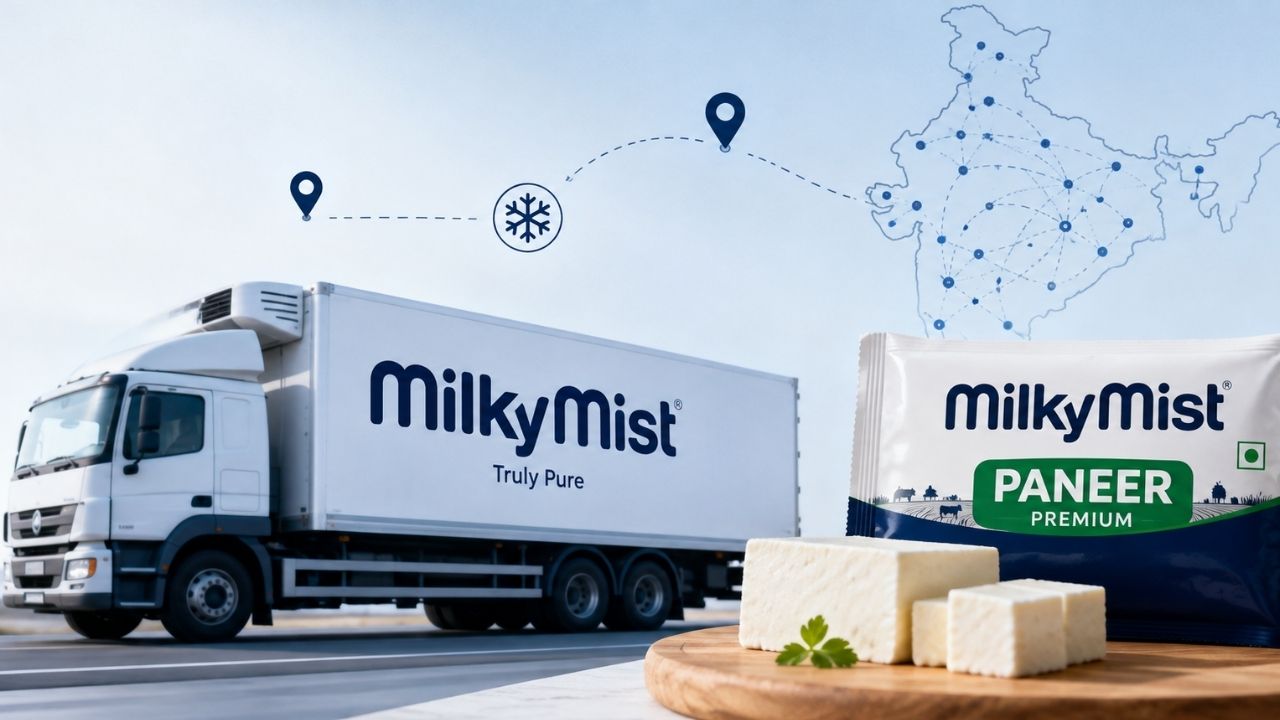
For decades, paneer was a hyperlocal product in India. Consumers typically bought it fresh from neighbourhood dairies, sweet shops or local milk vendors, making the category difficult to standardise, transport and scale.
Milky Mist’s growth tells a different story. The company’s expansion in paneer and other dairy categories has been built not only on consumer demand, but on the ability to create a supply chain capable of moving temperature-sensitive products across long distances while maintaining quality.
According to information cited in its IPO documents, Milky Mist holds an estimated 17-19% share of India’s organised private packaged paneer market, making it one of the country’s largest private paneer brands. It is also the largest private packaged cheese brand in South India and the third-largest private cheese player nationally.
Behind that market position is an integrated supply chain spanning milk procurement, processing, cold storage, distribution and retail.
Turning a local product into a scalable category
Paneer’s traditional supply chain was built around proximity. Fresh production and consumption generally happened within the same local market, limiting the distance the product could travel.
The emergence of organised packaged dairy changed that equation.
For Milky Mist, investments in manufacturing and refrigerated logistics have enabled paneer to move beyond its traditional regional market. The company’s integrated farm-to-retail model connects milk procurement from thousands of farmers with large-scale processing and a distribution network reaching markets across India.
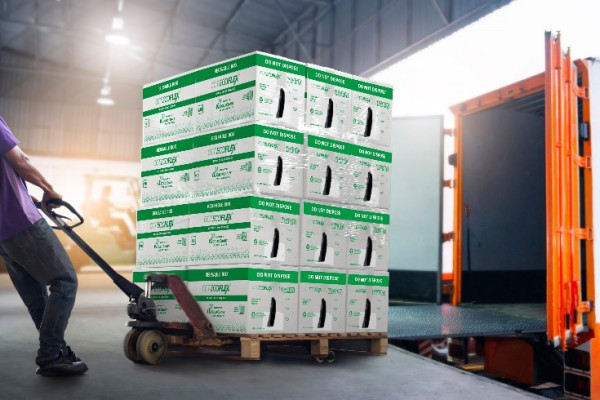
This is particularly important for a product with stringent temperature and quality requirements. Scaling paneer nationally requires more than manufacturing capacity. It requires coordinated procurement, processing, packaging, temperature-controlled transportation, distribution and inventory management.
Milky Mist’s model demonstrates how cold-chain infrastructure can become a competitive advantage in the dairy industry.
67,000 farmers to 3.5 lakh retail touchpoints
The scale of the network is visible across both ends of the supply chain.
Milky Mist directly procures milk from more than 67,000 farmers across southern India, creating a large sourcing base for its dairy operations. The milk is primarily processed at its facility in Perundurai, Tamil Nadu, which has evolved into a major integrated dairy processing hub.
From there, products move through a distribution network comprising more than 3,000 distributors and reach over 3.5 lakh retail touchpoints across 22 states, according to company disclosures.
This network gives the company something that was historically difficult to achieve in the paneer category: the ability to maintain product availability and consistency across geographically dispersed markets.
The supply chain therefore becomes part of the brand proposition. Consumers may see the Milky Mist label on a paneer packet, but behind that packet is a network connecting farmers, processing facilities, cold-chain operators, distributors, retailers and increasingly, digital commerce platforms.
Cold chain meets changing consumption
The opportunity for organised dairy companies is being reinforced by changes in India’s food consumption patterns.
Urban consumers are increasingly looking for packaged, convenient and protein-rich foods. Paneer has benefited from this shift because it occupies a strong position in India’s vegetarian protein market while also being widely used in household cooking.
The growth of restaurants, cloud kitchens, hotels and catering businesses has created another demand pool
For institutional buyers, consistency is critical. A restaurant chain operating across multiple cities cannot depend entirely on locally sourced paneer that may vary in quality, texture, weight and shelf life. Packaged products supported by a dependable distribution network offer greater predictability in procurement.
This creates an important supply-chain advantage for organised players: standardisation can replace fragmented sourcing.
Food delivery and quick commerce add another layer
The distribution equation is also changing as modern retail, e-commerce and quick commerce expand the reach of packaged food.
While offline channels continue to account for the majority of Milky Mist’s business, online channels contributed nearly 13.7% of revenue in FY26, according to company disclosures.
For dairy products, this shift has implications beyond the sales channel. Digital orders require greater inventory visibility, tighter replenishment cycles and reliable last-mile temperature management. As consumers increasingly expect dairy and frozen products to arrive quickly, the efficiency of the downstream supply chain becomes as important as manufacturing scale.
For companies operating in fresh and chilled food categories, therefore, quick commerce is not simply a retail opportunity. It is a logistics challenge involving forecasting, cold storage, fulfilment and last-mile delivery.
Building a broader dairy supply chain
Paneer may have been central to Milky Mist’s growth, but the company has progressively expanded its portfolio to include cheese, curd, butter, ghee, yogurt, ice cream and frozen foods.
By FY26, paneer, cheese and curd together accounted for nearly 59% of revenue from operations, highlighting the continuing importance of core dairy categories.
The wider portfolio also creates opportunities to improve supply-chain utilisation. A broader product mix can allow companies to leverage common procurement, processing, warehousing and distribution infrastructure across multiple categories, although individual products continue to require different temperature and handling conditions.
This is where scale becomes increasingly important. Once a company has established procurement and distribution infrastructure, adding complementary categories can potentially increase the utilisation of that network.
The geographic expansion test
Milky Mist’s next challenge is less about building a presence in its home market and more about replicating its supply-chain model nationally.
South India accounted for roughly 69% of revenue in FY26, even as the company has expanded its geographic footprint. Its products are already available across 22 states, but deeper penetration in North and West India will require the company to manage longer distribution distances, regional demand patterns and intense competition.
For a chilled product such as paneer, geographic expansion cannot be separated from logistics economics. The farther a product travels, the greater the importance of route planning, cold-chain reliability, inventory turns and regional distribution infrastructure.
That makes Milky Mist’s national expansion as much a supply-chain scaling exercise as a brand-building exercise.
From dairy brand to supply-chain story
Milky Mist’s rise illustrates a broader transformation taking place across India’s food industry.
Products that were once largely dependent on local production and neighbourhood distribution are increasingly becoming organised, packaged and nationally available. The transition is being enabled by investments in processing capacity, cold-chain infrastructure, distribution networks and increasingly sophisticated retail channels.
The company’s growth therefore offers a useful lens into the changing economics of India’s dairy supply chain. Its competitive advantage is not limited to the consumer’s familiarity with the brand. It lies in the infrastructure that allows the brand to consistently put the same product on shelves hundreds or thousands of kilometres from where the milk was procured.
As India’s packaged food market expands, the winners may increasingly be those companies that can connect farm procurement to factory processing, cold storage to distribution, and retail demand to responsive replenishment.
In that sense, Milky Mist’s journey from a regional dairy player to a national packaged-food business is also a story of how supply-chain integration can turn a highly localised food category into a scalable consumer business.
Source : Logisticsinsider