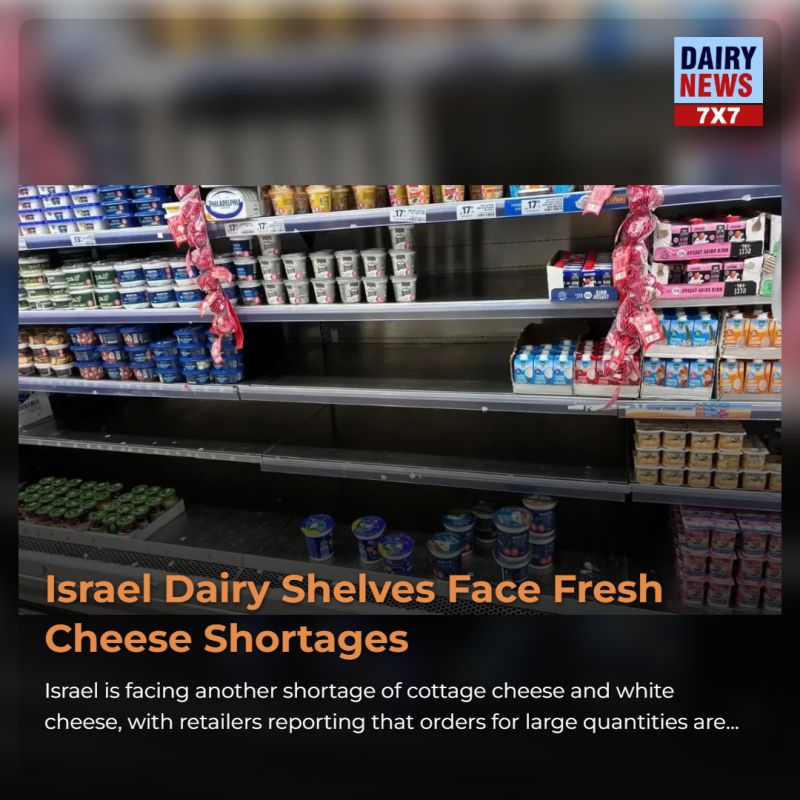
In Israel, cottage cheese and white cheese are again disappearing from supermarket shelves—not because production has stopped, but because fewer production days + stronger demand have left dairies with little room to rebuild inventory. Retailers are reporting that large orders are being only partially fulfilled or not fulfilled at all.
The immediate trigger: Yom Kippur and the surrounding holiday period resulted in almost four consecutive days without production, followed by a week with only about 3.5 production days.
Demand is adding pressure: Food-market sources estimate dairy demand has risen about 4% since the beginning of 2026, making it harder to recover volumes after production disruptions.
The earlier lesson is even bigger: Tnuva’s Alon Tavor plant previously faced a warehouse automation failure lasting more than two months. Cottage cheese was produced and packaged, but the automated system could not properly move pallets onto distribution trucks.
The executive takeaway: Dairy resilience is not just about processing capacity. It also depends on production flexibility, inventory buffers, warehouse automation, contingency systems and the ability to respond when demand remains high.
Industry experts expect the current supply gaps to narrow and availability to return to normal within about two days.
How much inventory flexibility should dairy companies maintain for unexpected production-day losses?
Tnuva Dematic Indian Dairy Association Department of Animal Husbandry and Dairying National Dairy Development Board
Source: linkedin –
Dairynews7x7