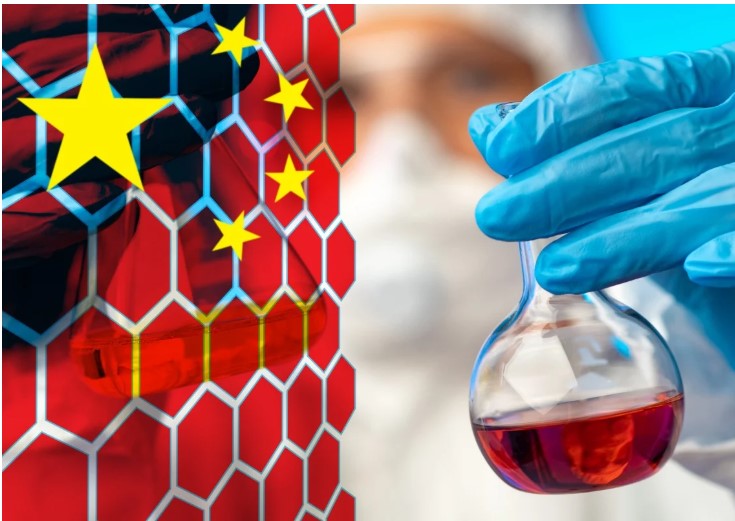
Mainland China could become one of the first markets in the world to approve a drug fully designed by artificial intelligence, as advances in AI and human genetics combine to create a “seismic shift” in drug development, according to executives of pharmaceutical giants.
“We will see in 2026 that we move from AI-assisted discovery to fully AI-designed compounds, perhaps entering the pipeline,” said Marc Horn, president of Merck China, at the Asian Financial Forum on Tuesday in Hong Kong. “We already see some very exciting examples in China.”
His comments came as China’s biopharmaceutical sector has evolved from a manufacturer of generics to a global innovation powerhouse over the past decade. Chinese drug makers signed a record US$135.7 billion in out-licensing deals last year, more than double 2024’s total of US$51.9 billion.
“At the moment, around 30 per cent of new drug pipelines are coming out of China,” Horn said. “China has huge patient data sets, and the government just announced the ‘AI Plus’ programme for the next couple of years, which should give a pretty good push to this field.”
“We might see a truly AI-designed compound approved in China next year,” he added.
AI Plus is a decade-long national blueprint designed to propel China into a new phase of development described as the age of “intelligent civilisation”.
Horn said Merck was looking for collaborations in antibody-drug conjugates and drugs for fertility and reproduction in China.
Paul Burton, chief medical officer at US drug maker Amgen, expected a “seismic shift” in 2026, where “AI-driven and human genetics-led discovery” would improve target validation, increase drug discovery speed and reduce experimental failures.
“Human genetics will increase our target-validation confidence,” he said. “AI, I believe, will allow us to pick better molecules, make better medicines and improve molecule design.”
Ma Jian, co-founder and CEO of Chinese AI-driven drug discovery firm XtalPi, said its AI-powered drug-discovery business involved both small molecules and biologics, including antibodies and small interfering RNA.
XtalPi also generates revenue from providing its AI tools, automation and robotics expertise, and systems to business partners.
“In the next few years, our business will also evolve, depending on how mature the technology becomes,” Ma said.
XtalPi, which listed in Hong Kong in 2024, has partnered with global pharmaceutical companies including Pfizer, Eli Lilly, Johnson & Johnson and Merck on AI-driven drug discovery projects.
One of its most recent deals is a partnership with Eli Lilly, under which XtalPi’s unit Ailux could receive up to US$345 million, according to an announcement in November.
In AI-driven drug discovery, where the edge comes not only from computing power but also from the ability to mine data from genomes and clinical trials, evidence shows that China’s clinical capabilities are close to US levels.
China had more than 100 AI-driven drug discovery companies as of July last year, according to data and consulting firm Shanghai Zhiyao Technology.
Dai Hongbin, vice-chairman of Hong Kong-listed Jiangsu Hengrui Pharmaceuticals, said at the forum that the company planned to use Hong Kong as a springboard to expand to Southeast Asia and other international markets.
Hengrui, China’s largest drug maker by market value, was also increasing research and development spending for innovative drugs, Dai said.
Source : SCMP