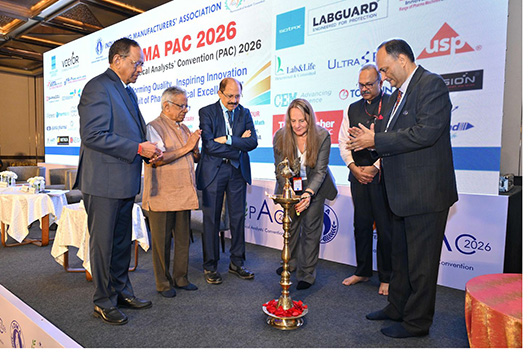
India is steadily strengthening its position as a global pharmaceutical innovation and manufacturing hub, backed by its expanding industry, growing scientific capabilities and evolving regulatory framework, Drugs Controller General of India (DCGI) Dr Rajeev Singh Raghuvanshi said at the 25th Pharmaceutical Analysts’ Convention (PAC) 2026 organised by the Indian Drug Manufacturers’ Association (IDMA) in Mumbai. Describing India as the “pharma innovation foundry of the world”, he highlighted the industry’s double-digit growth and the role of the Central Drugs Standard Control Organization (CDSCO) in supporting its progress. He also called for pharmaceutical manufacturers to continuously upgrade their quality management systems and embrace emerging technologies to accelerate innovation, strengthen global competitiveness and meet evolving international regulatory expectations.
The two-day silver jubilee convention, organised around the theme “Transforming Quality. Inspiring Innovation”, brought together senior regulatory officials, pharmaceutical industry leaders, pharmacopoeial experts, quality management professionals and academicians to discuss the changing landscape of pharmaceutical manufacturing, analytical science, regulatory compliance and innovation. The deliberations focused on translating developments in science, technology and regulatory practices into improvements in laboratory operations, manufacturing processes and medicine quality.
Echoing similar views, Deputy Drugs Controller (India) Dr Santosh Indraksha said India was poised to emerge as a global leader in innovation-led drug discovery, research and development. He underscored the need for pharmaceutical companies to strengthen quality systems, invest in advanced technologies and develop the technical capabilities required to address evolving international regulatory requirements. The transition towards innovation-driven pharmaceutical development, he indicated, would require an integrated approach involving scientific research, manufacturing excellence and regulatory compliance.
IDMA National President Bharat Shah emphasised that quality remains a defining factor in the growth and international standing of the Indian pharmaceutical industry. He stressed that manufacturers must continuously upgrade their quality management systems and adapt to technological developments to ensure that Indian medicines meet increasingly demanding global standards. He also highlighted the importance of combining manufacturing strengths with research, innovation and a sustained commitment to product quality.
His observations assume significance as Indian pharmaceutical companies face changing regulatory expectations in major export markets, particularly concerning good manufacturing practices, data integrity, quality risk management and advanced manufacturing technologies. Strengthening quality infrastructure and analytical capabilities is Therefore essential not merely for meeting regulatory requirements but also for building confidence among international regulators, healthcare systems and patients.
IDMA Secretary General Dr T. S. Parmar highlighted the need for greater industry-wide engagement in addressing emerging quality and regulatory challenges. He emphasised the important role of pharmaceutical analysts in ensuring product quality, consistency and safety throughout the manufacturing process. As pharmaceutical operations become increasingly technology-driven, analysts must move beyond conventional testing responsibilities and develop stronger scientific, technical and problem-solving capabilities.
Dr V G Nayak, chairman of IDMA’s Quality Management and Technical Committee, stressed the importance of globally aligned quality management systems in supporting the industry’s manufacturing transition. He highlighted the need for companies to invest in quality infrastructure, strengthen technical competencies and integrate regulatory compliance into every stage of production rather than treating it as a statutory obligation.
Ajit Singh, chairman of ACG, who received the Lifetime Achievement Award at the convention, highlighted innovation as a key growth driver for transforming India’s pharmaceutical manufacturing landscape. He emphasised the importance of technological development and innovation in enabling the industry to improve manufacturing capabilities and respond to changing global requirements.
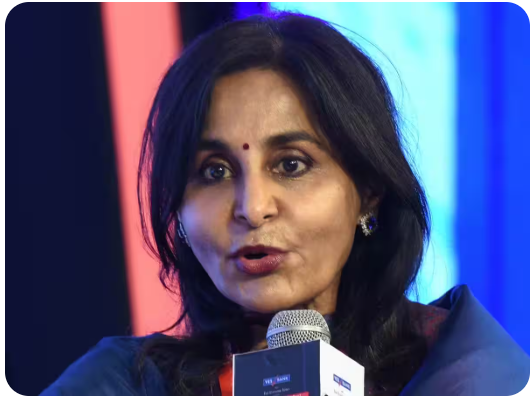
Dr Parizad Elchidana, pharmaceutical technical consultant, described quality as the soul of the pharmaceutical industry. She highlighted the changing responsibilities of pharmaceutical analysts, who are increasingly required to function as expert partners in an organisation’s success rather than limiting their role to laboratory testing. This transition requires analysts to understand manufacturing processes, identify potential quality risks and contribute to scientific decision-making across the organisation.
Constance Richard Math, deputy country director of the US Food and Drug Administration (FDA) India Office in New Delhi and guest of honour, said transforming drug quality would require the industry to move beyond a compliance-oriented approach towards building organisational resilience. She highlighted the importance of trusted data and resilient supply chains, while noting the US FDA’s engagement with India at the state level. Her observations underlined the importance of cooperation between regulators and industry in strengthening regulatory understanding, data reliability and supply-chain preparedness.
Padma Bhushan awardee Professor Dr Jyeshtharaj Bhalchandra Joshi, Chancellor of the Institute of Chemical Technology (ICT), Mumbai, and chief guest and keynote speaker, brought an academic and scientific perspective to the discussions. He highlighted the need to intensify innovation through scientific insights, disruptive approaches and an innovation-oriented mindset. Referring to indigenous technological development, he emphasised the potential of designing and manufacturing reactors in India at a fraction of the cost without compromising quality or process efficiency. His observations highlighted how indigenous engineering and research capabilities can reduce technology dependence and support more efficient pharmaceutical manufacturing.
The technical sessions and panel discussions examined the growing application of artificial intelligence, digital technologies and data-driven systems in pharmaceutical manufacturing and quality management. Experts discussed how these technologies could improve analytical processes, operational efficiency, data integrity and the identification of quality deviations. However, they also emphasised that technology adoption must be supported by appropriate validation, governance and regulatory oversight.
The convention further addressed the evolving expectations of international regulators, particularly the US FDA, and the need to help pharmaceutical companies, including small and medium-sized manufacturers, strengthen their quality infrastructure and compliance capabilities. Discussions also covered pharmaceutical analytical practices, regulatory developments, medical-device quality and the implementation challenges arising from the convergence of pharmaceutical and medical-device technologies.
Source: Pharmabiz