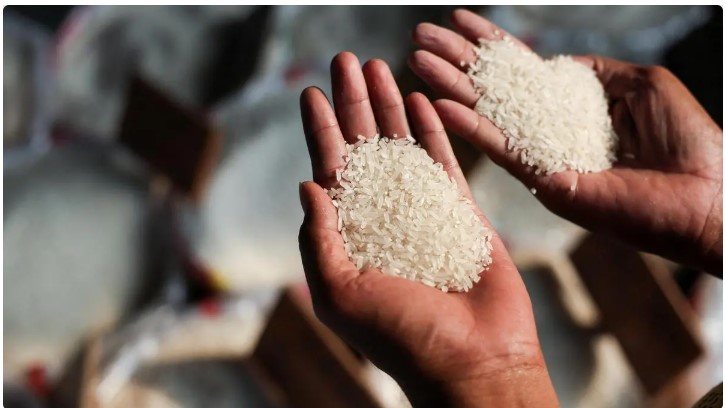
Pusa Rice DST1 is set to enter commercial production in this upcoming rabi season. What has been edited, why does it matter and what are the concerns?
What is the gene edited rice being introduced in India? When will it be introduced?
India developed two genome-edited rice varieties — DRR Dhan 100 (Kamala) and Pusa Rice DST1 — in 2025. A year after its announcement, the government is set to release Pusa Rice DST1 for commercial production in the upcoming rabi season, with transplanting around November.
The two varieties are not completely new rice plants, created from scratch. Instead, scientists started with established rice varieties and made targeted changes to particular genes.
Pusa DST Rice 1 is derived from MTU1010, which is suitable for rabi season in southern states. It is expected to be grown in Andhra Pradesh, Telangana, Karnataka, Tamil Nadu, Kerala, Chhattisgarh, Odisha, Madhya Pradesh, Maharashtra, Jharkhand, Bihar, Uttar Pradesh and West Bengal.
Why is it being introduced? What problem are they trying to solve?
The new varieties are intended to increase production while reducing the pressure that rice cultivation applies on water and the environment.
Pusa Rice DST1 is developed by Indian Council of Agricultural Research (ICAR)-Indian Agricultural Research Institute (IARI), New Delhi. The edit in its genome targets the Drought and Salt Tolerance (DST) gene, with the aim of improving the plant’s ability to cope with drought and salt-affected soils. ICAR reports yield advantages of 9.66 per cent to 30.4 per cent over MTU1010 under different saline and alkaline conditions in its field trials.
DRR Dhan 100 (also called Kamala) was developed by ICAR-Indian Institute of Rice Research, Hyderabad, from the popular Samba Mahsuri (BPT 5204) variety. Scientists edited a gene involved in cytokinin metabolism, with the aim of increasing the number of grains produced by each panicle. The resulting variety is said to mature about 20 days earlier than Samba Mahsuri, in around 130 days, and has a stronger stalk that is less prone to lodging, or falling over.
Both varieties are also said to be climate-resilient. Kamala’s advantage comes largely from its shorter duration, stronger stem and resource-use characteristics, while Pusa DST1 is more directly aimed at salinity and drought tolerance.
How is gene-editing different from a GM crop?
Both genetic modification and genome editing alter the DNA. The important difference is what kind of change is made and whether foreign genetic material is incorporated into the final plant.
Traditional transgenic GM crops have genetic material from another organism inserted into the plant. For example, Bt cotton contains genes derived from the bacterium Bacillus thuringiensis that enable the plant to produce proteins toxic to certain pests.
Genome editing, by contrast, can be used to make a targeted change to a gene already present in the plant.
India’s regulatory framework distinguishes between different forms of genome editing.
SDN-1 involves disrupting a target gene, generally through small insertions or deletions produced when the plant repairs a targeted DNA break.
SDN-2 uses a repair template to introduce a specific small change in the plant’s DNA.
SDN-3, in contrast, can introduce a new genetic sequence and therefore remains outside the exemption given to SDN-1 and SDN-2.
In 2022, India amended its guidelines for genetically modified plants and exempted modifications arising out of SDN-1 and SDN-2 from the same rigorous process as SDN-3 plants. However, the 2022 standard operating procedures specifically notes that the SDN-1 and SDN-2 plants covered by the exemption must be free of transgenes.
The two rice varieties have been developed by SDN-1 genome editing.
What are some concerns which arise in gene edited rice?
A scientist who has worked on rice gene editing for nearly 30 years, and who asked not to be named, said the absence of a foreign gene was not, by itself, the end of the scientific assessment. The source questioned whether the evidence publicly available was sufficient to explain the mechanism behind the reported yield gains and whether the claimed advantages would hold across different environments.
The source also questioned whether the reported magnitude of yield improvement could be sustained across widely different locations without some trade-off in another trait.
Reports suggest that unintended mutations can lead to alterations in patterns of gene function, which in turn can lead to unintended changes in the biochemistry of the organism. In gene-edited plant foods, these changes could include production of unexpected toxins or allergens, or altered nutritional value.
The government says the varieties underwent biosafety scrutiny, were assessed for the absence of foreign DNA, whether the mutations were stable and whether the phenotype was robust and were tested at more than 50 locations each over 2023 and 2024.
The gene-edited rice varieties are different in another important aspect. Unlike the GM crops, where farmers had to buy new seeds every season, the gene-edited crops are said to be like the normal seeds that farmers have to buy only once or when needed.
The anonymous rice scientist interviewed for this story, meanwhile, believes the evidence would be easier to assess if the underlying scientific work and the mechanism behind the reported yield advantage were available for wider scientific scrutiny.
Which GM crops are allowed in India, and what has been their experience?
Bt Cotton remains India’s only GM crop approved for commercial cultivation, with GEAC approval in 2002. It was modified to produce proteins that target bollworm pests. Bt brinjal cleared India’s regulatory process in 2009 but was not approved for commercial cultivation. GM mustard, developed to boost edible-oil yields by 25–30 per cent, received conditional environmental clearance from GEAC but became embroiled in a Supreme Court case. Activists argue it risks harming honeybee populations and could impact lucrative organic honey exports to the US and EU, which require strict non-GMO certification.
What has happened with gene-edited crops elsewhere?
Globally, regulators are increasingly distinguishing transgene-free gene-edited crops from conventional GMOs. The US and Canada have allowed products such as gene-edited anti-browning potatoes and high-oleic soybeans into commercial production, while Japan has approved gene-edited foods including high-GABA tomatoes. The UK’s 2023 Precision Breeding Act also created a separate regulatory pathway for gene-edited crops. The EU adopted a new framework in July 2026 for plants developed using New Genomic Techniques (NGTs), with “Category 1” crops involving changes that could occur naturally exempted from the bloc’s stricter GMO rules; the framework is expected to be fully implemented by 2028.
Source: Thehindubusinessline