The story of ‘disappearing’ cotton in North India is reaching a critical turning point!
Once known as the “White Gold” of Punjab and Haryana, cotton is rapidly disappearing from farmers’ fields. During the current Kharif season 2026-27, cotton area in Punjab has reportedly shrunk to barely 50,000 hectares, while in Haryana it is down to around 2.8 lakh hectares among the lowest levels witnessed in recent history.
Despite years of announcements, incentives, campaigns and diversification rhetoric, farmers are steadily losing confidence in cotton cultivation.
📉 Cotton is disappearing.
📉 Farmers are moving away.
📉 The crisis is deepening.
Yet surprisingly, this alarming decline has not generated the sense of urgency it deserves among key stakeholders. For state governments, the issue appears manageable. For textile industries in Ludhiana, Hisar and beyond, the recent removal of customs duty (11%+cess) on imported cotton has created a convenient alternative. High-quality imported cotton is now available at lower prices, reducing immediate concerns about domestic shortages.
Everything appears “changa”. But only on paper.
The Real Cost of Losing Cotton:
The consequences of abandoning cotton extend far beyond a single crop. As cotton disappears, farmers are increasingly reverting to rice cultivation in areas where diversification was once considered essential. The decline of cotton is therefore not merely a crop issue it is a water, environment, sustainability and rural livelihoods issue.
Technology Revived Cotton Once. It Can Do So Again:
When Bt cotton was introduced in 2002, productivity increased dramatically, pest management improved and India emerged as one of the world’s leading cotton producers and exporters.
Today, cotton farmers face a very different set of challenges:
🐛 Devastating pink bollworm infestations
🌡️ Climate variability and extreme weather
📉 Stagnant productivity
🚜 Labour shortages for weeding and harvesting
These challenges cannot be solved through incentives alone. They require innovation, technology and policy support for scientific solutions. Access to next-generation cotton technologies including pink bollworm-resistant and herbicide-tolerant biotech traits will be critical if North India is to reclaim its cotton legacy.
Demonstrating the Future at Sirsa:
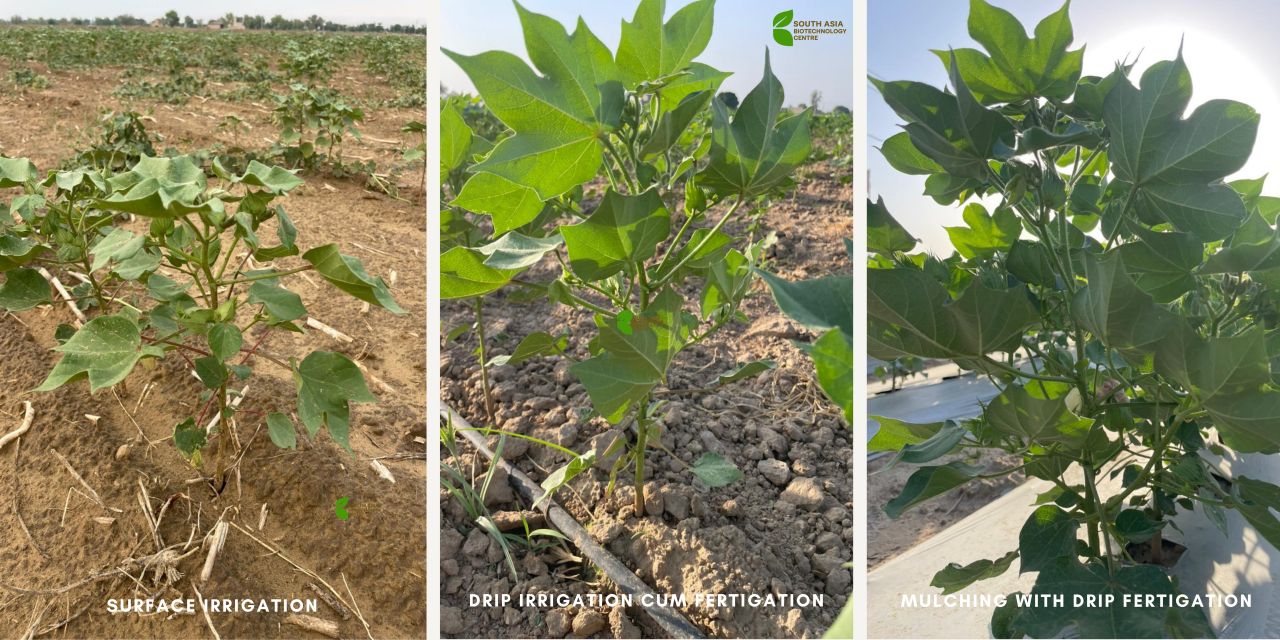
Recognizing these challenges, the South Asia Biotechnology Centre (SABC) is demonstrating a new model of cotton cultivation supported by RASI SEEDS at its High-Tech R&D Station in Sirsa.
📍Hope is Still Alive:
An Invitation to Witness the Results of the High Tech Regenerative Cotton
Source : LinkedIn – deepak@sabc.asia