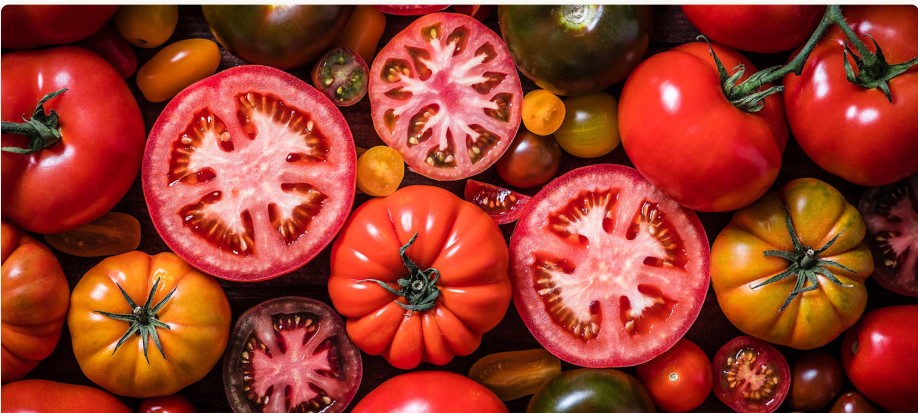
In a research greenhouse in eastern China’s Zhejiang province, a batch of ordinary-looking tomatoes carry a scent more commonly associated with movie theaters than farmers’ markets: the aroma of buttered popcorn.
A team of Chinese and Australian researchers has generated what they describe as the world’s first “extraordinary aromatic tomato plants” by using CRISPR/Cas9 gene-editing technology to simultaneously silence two genes responsible for suppressing aromatic compounds in the fruit. The study, published in the Journal of Integrative Agriculture on January 24, is now drawing wider attention for its novel approach to a long-standing problem in commercial agriculture — the erosion of tomato flavor through decades of breeding for yield, durability, and appearance.
A Lesson Borrowed From Rice
Rather than trying to restore the traditional tomato flavor profile, the researchers turned to fragrant rice for inspiration. “People like fragrant rice, and its selling price is higher than that of ordinary rice,” wrote Xu Shengchun, deputy director of the Biotechnology Research Institute at Xianghu Laboratory in Hangzhou and the study’s corresponding author.
The team targeted two genes — SlBADH1 and SlBADH2 — which are tomato counterparts of a gene known as BADH2. In fragrant rice varieties, naturally occurring mutations in BADH2 allow an organic compound called 2-acetyl-1-pyrroline, or 2-AP, to accumulate. That compound is what gives premium basmati and jasmine rice their prized popcorn-like scent.
Using CRISPR/Cas9, the researchers knocked out both genes in the Alisa Craig tomato cultivar. While blocking SlBADH2 alone raised 2-AP levels, the double mutants proved far more effective — exhibiting 2-AP concentrations in fruit and leaf tissues more than four times higher than the single-gene mutants.
Flavor Without Sacrifice
A central finding of the study is that the genetic modifications did not compromise the tomatoes’ agronomic performance. Measurements of flowering time, plant height, fruit weight, sugar content, organic acids, and vitamin C remained statistically indistinguishable from unmodified plants, achieving what the researchers called “flavour improvement without yield loss”.
That balance matters in a crop where decades of commercial breeding have systematically traded flavor for productivity and shipping resilience. Modern supermarket tomatoes begin losing their aroma immediately after harvest due to metabolic changes, a decline that worsens during transport and storage.
From Lab to Grocery Shelf
The team has signaled that the next step is to apply the technique to commercially dominant tomato varieties. “Ongoing work aims to introduce this fragrance to elite commercial cultivars, which may enhance their flavour complexity, potentially improving consumer preference and market value, like fragrant rice varieties,” said Peng Zheng, an associate professor at Xianghu Laboratory and co-first author of the study.
Whether shoppers will embrace a tomato that smells like a bowl of popcorn remains to be seen. But in a market where consumers have long lamented the bland flavor of mass-produced tomatoes, the research offers a proof of concept that CRISPR can add back what industrial agriculture has taken away.
Source : Perplexity